
Concrete driveways and paths
A concrete driveway is an external slab that takes car loads, rain and frost. Slabs that take heavy loads need a higher-strength concrete and a brush finish, and I.S. EN 206 asks for air-entrained concrete where wet horizontal surfaces see a lot of freezing and thawing.
Paths and aprons around a house need the same attention to falls, joints and frost as the drive.
Free, no obligation. One local concrete contractor prices it, not five.
Which concrete for a drive
Under I.S. EN 206, horizontal surfaces exposed to rain and freezing are exposure class XF3, and the standard recommends C30/37 air-entrained, or C32/40, there. For a driveway, ask the supplier for a mix meant for external paving, and say so on the order.
Finish, falls and joints
- A brush finish for grip on slabs outside that take loads.
- A fall away from the house, so water doesn't sit against the walls or run under the door.
- Joints to control where the slab cracks as it shrinks. Ask where they'll go before the pour.
- An edge against the lawn or the boundary, so the slab isn't undermined.
Frost, salt and new concrete
Driveways are the job to watch in winter: thin and wide, they lose heat fast. Concrete shouldn't be poured when the air is 5°C and falling, and can start at 3°C and rising. It must never go on frozen ground. Salt can damage a concrete surface, and ammonia-based de-icers are particularly aggressive.
When you can use the drive
A standard concrete drive is usually fit for parking after 5 to 7 days, depending on the mix and the weather. Turning the steering wheel while the car is stopped can break the surface of concrete that hasn't fully cured. See how long concrete takes to cure.
What decides the price
A slab is priced per m² and a foundation per metre, for your job: the area and depth, the concrete grade, the steel, access for the truck and what's under the slab. Send the job and you get a written price.
- The area and the depth
- Breaking out and removing an old drive
- The sub-base: depth of stone and compaction
- Truck access from the road, or a pump
- The finish: brushed, or something decorative
- Drainage: a channel at the garage or the gate
Floors laid by the contractor who takes your call
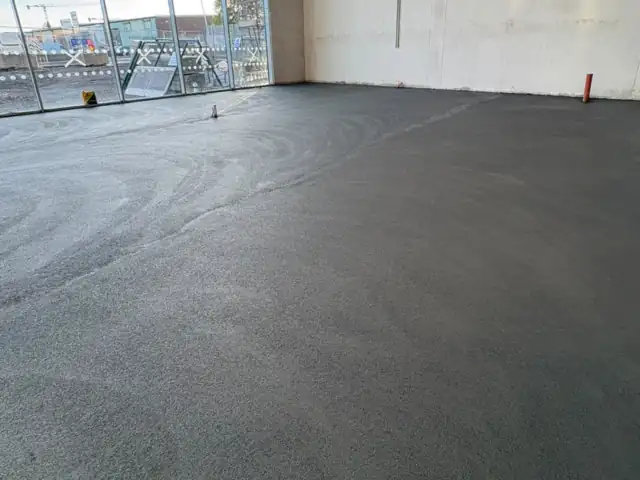
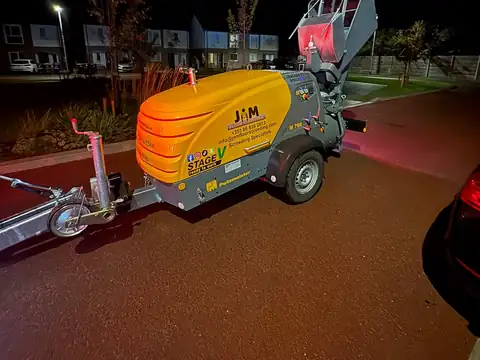
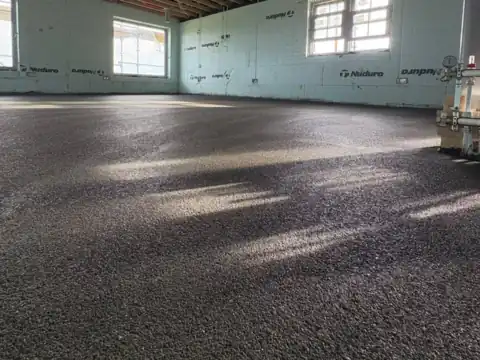
Calls on this site ring JAM Floor Screeding: James Mulhall, based in Portlaoise, 25 years laying floors. Lines open Mon to Sat, 7am to 6pm. He pours concrete floors, slabs and foundations as well as screed. These are his jobs.
“JAM were punctual, professional and efficient and did an outstanding job on pouring our new floor as part of a renovation. Very highly recommend!”
“Excellent work, laser level finish, neat and tidy worker, highly recommend.”
“Top class work by james and his crew, highly recommend”
Quoted word for word from JAM Floor Screeding's Google reviews. Read them on Google
Get the job priced in 4 quick taps
Tell us about the job. It goes to one concrete contractor who covers your county, and they ring you to price it.
Concrete contractors guides & price breakdowns
Straight answers to what people ask most: itemised costs, specifications, planning or grants, and what to check before you book.
More guides & resources: Concrete vs screed · Slab depth for an extension · Building Regulations for concrete · All guides & calculator hub · Technical & trade glossary · Frequently asked questions · All areas covered · About this site
Driveways and paths questions
What concrete is used for driveways?
A higher-strength mix with a brush finish. For wet surfaces exposed to frost, I.S. EN 206 recommends C30/37 air-entrained or C32/40.
How long before I can drive on a new concrete drive?
A standard concrete drive takes cars after about 5 to 7 days, depending on the mix and the weather. Avoid turning the wheel while stopped until it has fully cured.
Can a concrete driveway be poured in winter?
Yes, with care. Not when the air is 5°C and falling, only at 3°C and rising, never on frozen ground, and covered with frost blankets.
Should I salt a new concrete drive?
De-icing salt can damage concrete surfaces, and ammonia-based de-icers are the worst.
Concrete contractors across all 26 counties
Requests from all 26 counties go to one vetted local specialist who covers your county — from Dublin, Cork, Galway and Limerick to Kildare, Meath, Wicklow, Waterford and Donegal. Pick your county below for local prices, specifications and advice. Compare all areas covered →
Get a free quote for the job
Four taps and your number. One concrete contractor who covers your county rings you with a price. Nothing is booked until you say yes.