
How long concrete takes to cure
Concrete doesn't dry; it hardens as the cement reacts with the water, and it keeps getting stronger for weeks. Its strength class is the strength at 28 days. The first 7 days matter most: that's when it most needs protecting from drying out and the weather.
You can usually park on a standard concrete drive after 5 to 7 days. Farm structures under S.100 shouldn't go into use for at least 28 days.
Free, no obligation. One local concrete contractor prices it, not five.
From the pour to full strength
| When | What happens |
|---|---|
| First 48 hours | Keep the concrete at 5°C or above, so it reaches 5 N/mm² before any frost |
| First 7 days | Protect it from drying out and from weather: the most important stretch |
| 5 to 7 days | A standard concrete drive is typically fit for parking |
| 28 days | The age at which the strength class (e.g. C25/30) is measured |
| 28 days or more | S.100 farm structures: not into service before this, longer for silage |
How concrete is cured
Curing means stopping the moisture leaving. The Federation's S.100 guide lists the ways:
- Spraying the surface with water or a mist, once it has set
- Polythene laid before the surface dries, fixed down so the wind can't get under it
- Wet coverings, kept wet
- A curing compound, once the bleed water has gone
- A wind break for slabs exposed to drying winds
- Leaving the formwork on for formed faces
Poor curing, it says, means a weak surface, lost strength and plastic shrinkage cracks.
Cold weather
Low temperatures slow strength development for several weeks, and more so with GGBS or PFA in the mix. Its guidance: don't start pouring when the air is 5°C and falling; start only at 3°C and rising; never pour on frozen ground; keep ice and snow off the steel and shuttering; cover the slab with frost blankets; and leave formwork on longer.
Each county page on this site gives the 1991–2020 monthly mean temperature at the county's largest town, from Met Éireann's grid. In several of them the January mean is under 5°C.
Curing isn't the same as drying
A concrete slab under a screed has a second clock: the screed has to dry before the floor finish goes down. That's measured in days per mm of screed, and it's covered on our sister site: screed drying time.
Floors laid by the contractor who takes your call
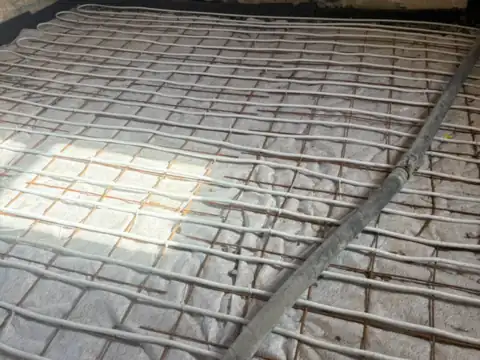
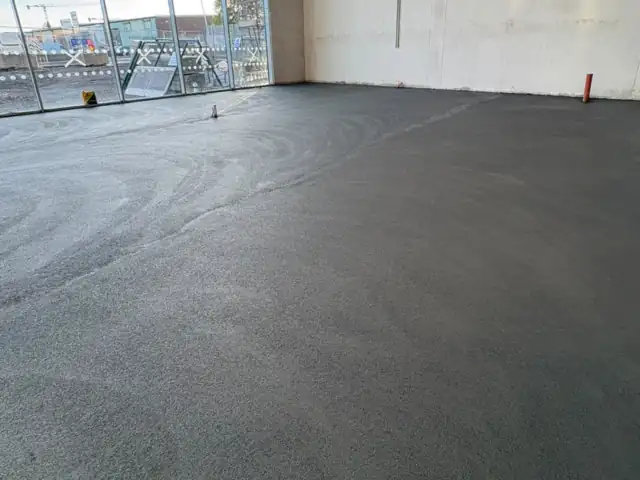
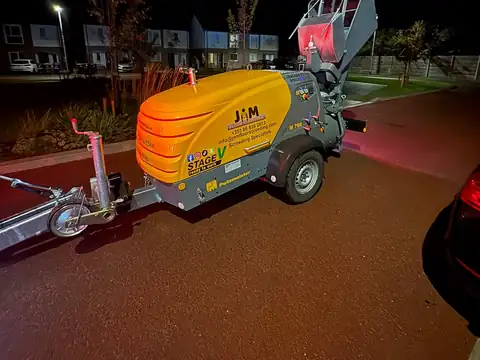
Calls on this site ring JAM Floor Screeding: James Mulhall, based in Portlaoise, 25 years laying floors. Lines open Mon to Sat, 7am to 6pm. He pours concrete floors, slabs and foundations as well as screed. These are his jobs.
“JAM were punctual, professional and efficient and did an outstanding job on pouring our new floor as part of a renovation. Very highly recommend!”
“Excellent work, laser level finish, neat and tidy worker, highly recommend.”
“Top class work by james and his crew, highly recommend”
Quoted word for word from JAM Floor Screeding's Google reviews. Read them on Google
Get the job priced in 4 quick taps
Tell us about the job. It goes to one concrete contractor who covers your county, and they ring you to price it.
Concrete contractors guides & price breakdowns
Straight answers to what people ask most: itemised costs, specifications, planning or grants, and what to check before you book.
More guides & resources: Concrete vs screed · Slab depth for an extension · Building Regulations for concrete · All guides & calculator hub · Technical & trade glossary · Frequently asked questions · All areas covered · About this site
Concrete curing time questions
How long does concrete take to cure?
It gains strength for weeks. Its strength class is measured at 28 days, and the first 7 days are when it most needs protecting.
When can I walk on new concrete?
No one figure fits every mix. Keep foot traffic off until the contractor says, and keep it covered and damp for the first 7 days.
When can I drive on a new concrete drive?
A standard concrete drive takes cars after about 5 to 7 days, depending on the mix and the weather.
Can concrete be poured in frost?
Not on frozen ground, and not when the air is 5°C and falling. You can start at 3°C and rising, with the concrete kept at 5°C or above for 48 hours.
Should new concrete be watered?
Keeping it damp is one way of curing it: spraying or misting once set, wet coverings, or polythene to keep the moisture in.
Concrete contractors across all 26 counties
Requests from all 26 counties go to one vetted local specialist who covers your county — from Dublin, Cork, Galway and Limerick to Kildare, Meath, Wicklow, Waterford and Donegal. Pick your county below for local prices, specifications and advice. Compare all areas covered →
Get a free quote for the job
Four taps and your number. One concrete contractor who covers your county rings you with a price. Nothing is booked until you say yes.